

Every major vendor relationship an organization enters begins with a proposal. Dozens of them, often; each running to hundreds of pages, each making bold claims about capability, delivery, and value that will bind the organization for years. And the process by which those proposals are evaluated? For most organizations, it is a handful of analysts, a shared spreadsheet, and a deadline that was already too tight before the proposals arrived.
McKinsey’s 2025 research on procurement organizations found that the function’s spending managed per full-time equivalent has increased by 50% over the past five years, meaning procurement teams are being asked to do dramatically more with the same or fewer people. RFP evaluation sits directly in the path of that pressure. Complex solicitations demand weeks of careful analysis; the business wants a vendor decision in days. Something gives and what gives is usually the depth and consistency of the evaluation itself.
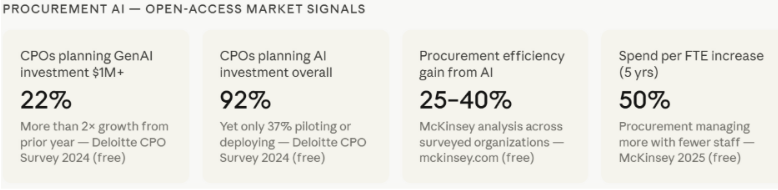
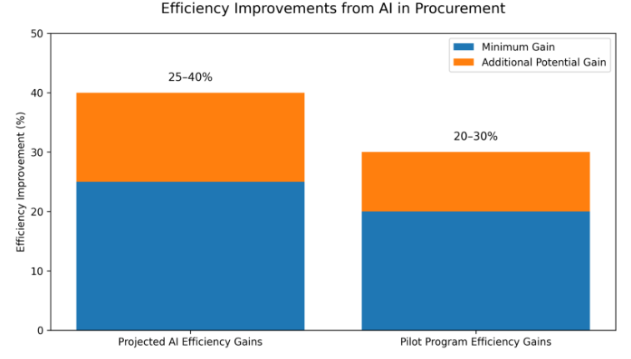
AI agents will radically affect the procurement organization, making it more efficient, more agile, and increasingly strategic, with McKinsey analysis suggesting technology will reshape procurement into a function that is 25 to 40% more efficient. RFP scoring is where that efficiency promise is most immediately visible and most urgently needed.
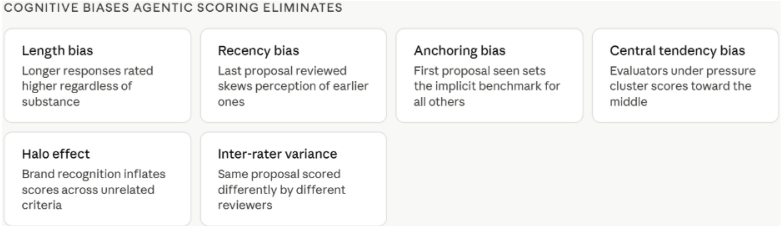
Before examining what agentic evaluation delivers, it is worth confronting precisely what manual evaluation costs, because the inefficiency is not simply time. It is the systematic distortion of decisions by cognitive biases that evaluators cannot fully control, even when they are aware they exist.
One vendor dedicates three pages to a requirement that another addresses in a single, precise paragraph. The manual evaluator, consciously or not, reads depth into length. A proposal reviewed late in a long evaluation session benefits from anchoring effects set by earlier proposals; or suffers from evaluator fatigue that flattens scores toward the middle. Reviewers with different levels of technical expertise apply the same rubric differently, producing inter-rater variance that has nothing to do with vendor quality and everything to do with who happened to review which section.
These distortions are not hypothetical. They are the documented behavioral reality of human evaluation under cognitive load and time pressure, and they mean that the score assigned to a proposal reflects not just the vendor’s capabilities, but the accident of how the evaluation was organized. In high-stakes procurement decisions involving multi-year contracts and significant expenditure, that distortion carries real financial consequences.
Deloitte’s 2024 survey of over 100 Chief Procurement Officers found that the top value unlocked by AI in procurement, ranked above productivity gains and cost optimization combined, was enhanced analytics and decision-making. That finding is not surprising. The greatest pain in procurement is not that processes are slow, it is that decisions are made on insufficiently rigorous analysis. Agentic RFP scoring attacks both problems simultaneously.
An agentic RFP scoring system begins where every evaluation must: with the criteria. The procurement team defines requirements, assigns weightings, and establishes the scoring methodology; the dimensions that matter and how they will be prioritized in the final selection decision. This human judgment is not replaced by the system. It is operationalized at a scale and consistency no human reviewer team can sustain.
For each proposal, the agentic system identifies precisely where each requirement is addressed, regardless of how the vendor chose to structure their document. This first normalization step is itself transformative: every proposal is evaluated against the same structural framework, not against how well the vendor happened to organize their submission. A vendor who buries their approach to a critical security requirement in appendix D receives the same scrutiny as one who leads with it. A vendor who addresses a requirement across three disconnected sections has those sections identified and synthesized, not missed because a reviewer was skimming page 94.
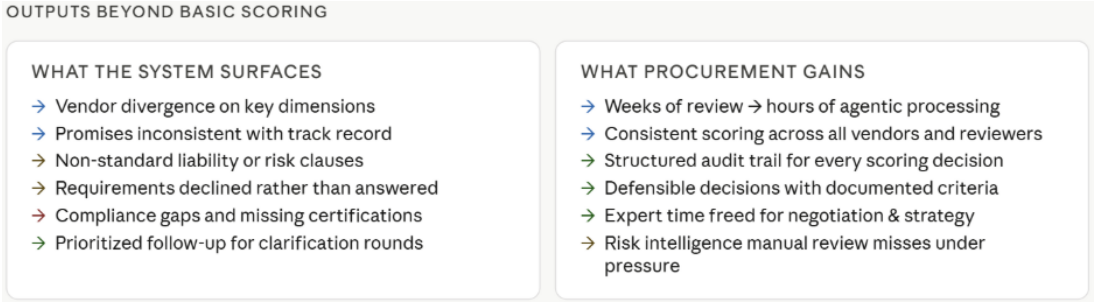
The system extracts each vendor’s stated approach, scores it against the rubric, and explicitly notes gaps and ambiguities. Crucially, it distinguishes between a vendor who attempted an answer that fell short and one who declined to address a requirement entirely, a distinction that matters enormously for risk assessment but is routinely missed in manual reviews where silence is often read as an implicit positive.

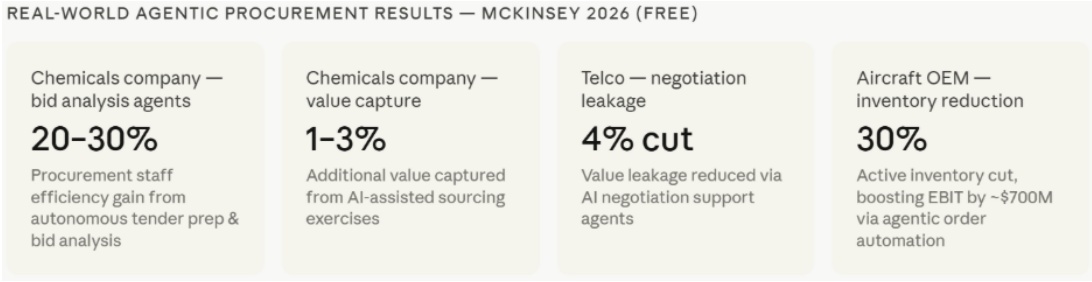
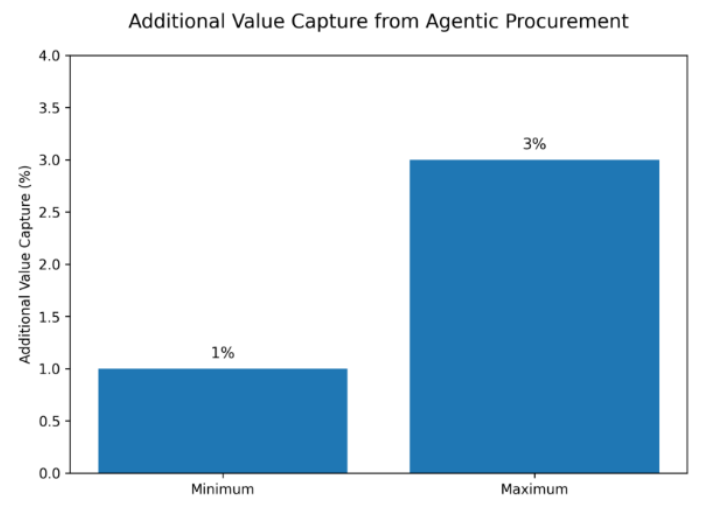
A chemicals company piloting AI agent for autonomous sourcing, automated the preparation of tenders, the identification and prequalification of suppliers, and the analysis of competing bids with another agent routing, tracking, and synthesizing supplier queries and clarifications during sourcing exercises. The result was a 20 to 30% increase in procurement staff efficiency alongside 1 to 3% additional value capture. These gains compound: faster evaluation cycles mean faster time to contract, which means faster time to value.
Basic scoring, numerical values against a rubric, is the floor of what agentic RFP systems deliver, not the ceiling. The more consequential outputs emerge from cross-vendor comparative analysis and risk intelligence that manual evaluation simply cannot generate at the same depth or speed.
Comparative analysis surfaces dimensions where vendors genuinely diverge in ways that raw scores obscure. Two vendors may both receive adequate scores on an implementation section while proposing fundamentally different approaches; one phased over twelve months with defined milestones, one compressed into six months with ambitious assumptions that deserve scrutiny. A score comparison reveals a tie; comparative analysis reveals a strategic choice the procurement team needs to make consciously.
Risk analysis is where agentic evaluation pays some of its highest dividends and where manual review under deadline pressure most reliably fails. Agentic systems cross-reference proposal language against standard contract structures, flagging non-standard liability terms, identifying where vendors have weakened indemnification clauses, and noting where compliance certifications are asserted but not evidenced. These are precisely the details that surface in contract disputes eighteen months after award. They are also precisely the details that evaluators working through proposal eleven of fifteen are most likely to miss.
McKinsey’s 2026 research on agentic procurement describes AI agents as digital colleagues that analyze supplier bids overnight, track market indices in real time, flag cost deviations, and prepare negotiation playbooks, enabling an end-to-end operation from identifying a strategic opportunity through sourcing, commercial strategy, and post-award performance tracking. This is not a description of a faster spreadsheet. It is a fundamentally different operating model.
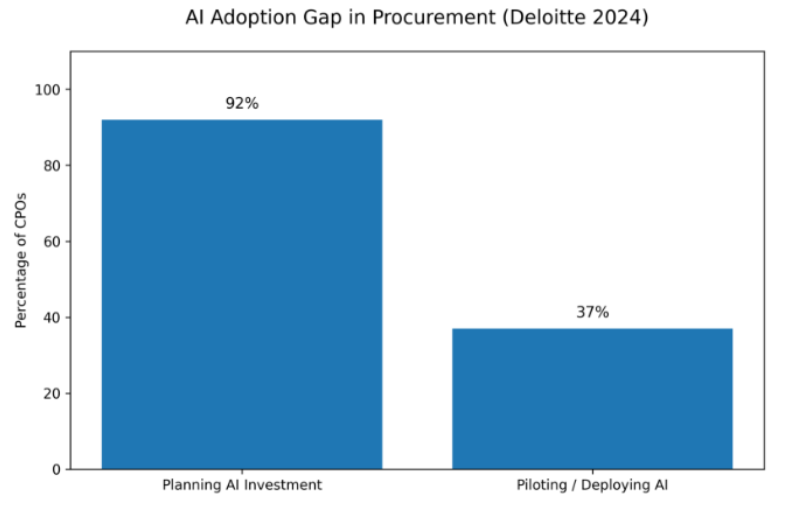
While 92% of CPOs are beginning to envision AI’s possibilities and plan to invest, only 37% were piloting or deploying it at the time of Deloitte’s 2024 survey; a gap that represents both the opportunity and the urgency. The organizations closing that gap in RFP evaluation specifically are not just processing proposals faster. They are fundamentally reallocating how procurement expertise is deployed.
IBM’s analysis of procurement transformation identifies the core shift as moving from transactional automation to strategic intelligence, enabling procurement teams to predict market shifts and supply chain risks before they occur, use category intelligence for smarter sourcing decisions, and enhance supplier engagement through AI-driven negotiation preparation and performance analysis. None of that strategic value is accessible to teams that are spending their best hours reading and scoring proposals manually.
McKinsey’s research on data and AI in procurement found that mastering procurement data, including supplier bid analysis and competitive intelligence, can increase the pipeline of value creation initiatives by up to 200%. That pipeline does not materialize when procurement’s analytical capacity is consumed by document processing. It materializes when that capacity is redirected toward supplier relationship development, negotiation preparation, and category strategy, the work that requires genuine human expertise and creates durable organizational advantage.
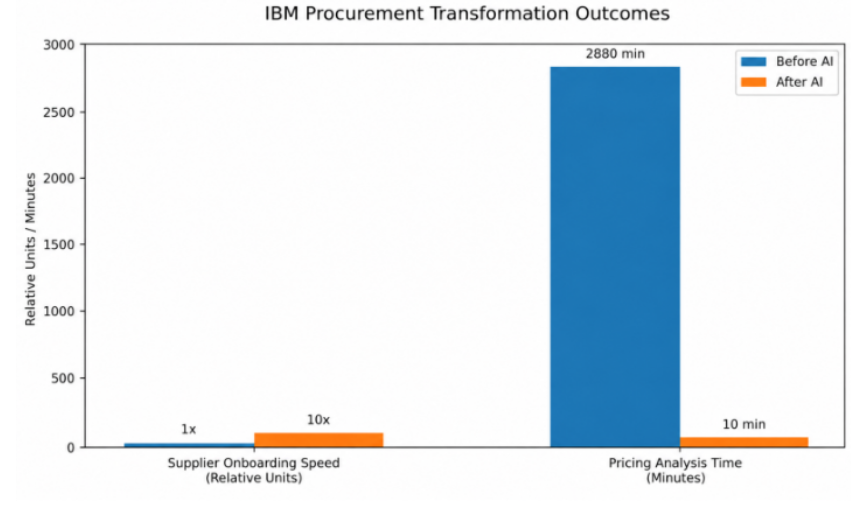
IBM’s own procurement transformation using automation has enabled its professionals to onboard suppliers ten times faster and conduct pricing analysis in ten minutes rather than over the course of two days, a concrete illustration of what becomes possible when the transactional burden is lifted from skilled practitioners.
The organizations deploying agentic RFP evaluation today are not simply running a faster version of their existing process. They are building a procurement function capable of handling greater complexity, making more defensible decisions, generating richer vendor intelligence, and investing its human expertise where it creates the most value; at scale, consistently, cycle after cycle.